
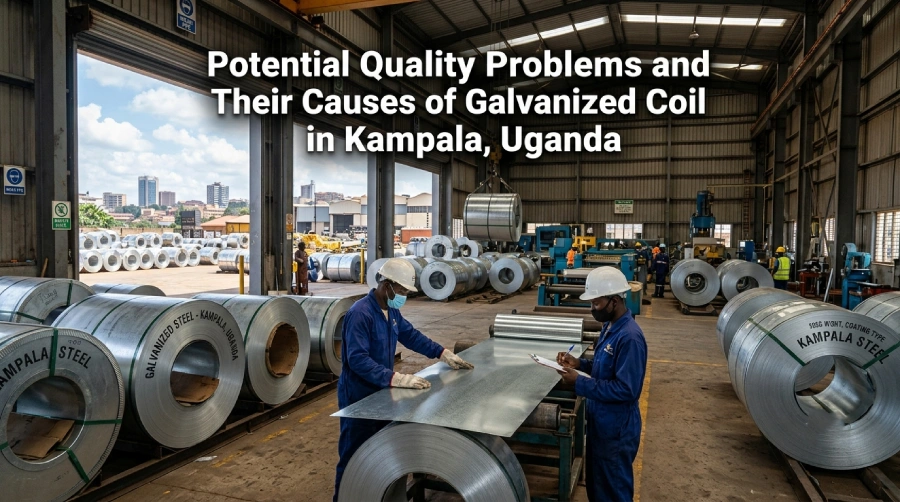
Potential Quality Problems and Their Causes of Galvanized Coil in Kampala, Uganda
Galvanized steel coil is widely used in roofing, manufacturing, construction development, and infrastructure due to its strength and corrosion resistance. Choosing the right galvanized steel coil in Kampala, Uganda, considering the weather changes, rainfall seasons, and even construction development, makes it very essential. However, problems of quality occur due to poor zinc coating, unsuitable steel grades, wrong storage methods, manufacturing process, and even transport.
Moreover, in this comprehensive guide, we will explore the most common quality problems associated with galvanized coil in Kampala, Uganda, their underlying causes, and practical ways to identify potential defects. That is why, with the right knowledge, buyers can make an informed decision, enhance production efficiency, and achieve more reliable results across different industrial and construction applications.
What is a Galvanized Coil in Kampala, Uganda?
A galvanized coil in Kampala, Uganda, is a steel sheet coated with zinc, which increases its durability and corrosion resistance. This steel undergoes the process of galvanization, which involves the bonding of the metal with zinc in order to make it more resistant to moisture. Understanding the characteristics of galvanized coil is important if a company is buying the product in Kampala, Uganda, where it can be used for roofing sheets, walls, ducting, agricultural buildings, stores, and fabricated goods.
The buyer must consider the characteristics of steel, the zinc coating weight, sheet thickness, width, surface finish, and other mechanical characteristics. This is important because incorrect selection will lead to premature corrosion, processing problems, and additional expenses.
Technical Configuration of Galvanized Coil in Kampala, Uganda
| Technical parameter | Common specifications or options |
|---|---|
| Base metal | Cold rolled steel or hot rolled steel, according to product |
| Galvanizing method | Hot dip galvanized or another zinc coating process as required |
| Steel grade | Grades for commercial, forming, structural or application-specific use |
| Thickness | Typically in the range of 0.20-3.00 mm, depending upon application |
| Coil width | Usually around 600-1,500 mm, depending upon production capabilities |
| Zinc coating mass | Such as Z60, Z100, Z120, Z180 and Z275 |
| Surface finish | Spangled, minimal spangle, or no spangle, if possible |
| Mechanical properties | Yield strength, tensile strength, and elongation |
| Coil weight | Varies according to size, thickness, and production capabilities |
| Applicable standard | ASTM A653/A653M or EN 10346, for example |
Problems of Quality and Their Causes You Must Note Down in Galvanized Coil
Here are some quality issues mentioned below that will provide insight into what to watch out for, reasons for such defects, and their possible influence on the performance of galvanized coil in Kampala, Uganda.
1. Uneven Zinc Coating
Uneven zinc coating refers to a situation when the coating is not uniformly applied to the steel substrate. This issue may occur because of non-uniform conditions of the bath, poor process control, and non-uniform surface preparation prior to galvanization. Those parts that lack proper coating may be more susceptible to corrosion, especially under conditions of constant exposure to moisture. Buyers should pay attention to the visible differences in coating and require relevant testing reports on coatings’ conformity with the agreed-upon specification.
2. White Rust Formation
White rust is characterized by a white or greyish powdery coating that is formed on galvanized coil in Kampala, Uganda. The formation of white rust usually happens when moisture gets trapped between adjacent surfaces of tightly coiled steel sheets during storage and transport. Such problems may appear due to poor ventilation and condensation. While white rust at the initial stage is not necessarily indicative of coating failure, large amounts of white rust may damage the protective zinc coating.
3. Surface Scratches and Mechanical Dents
These types of imperfections can occur during the process of lifting, loading, unloading, slitting, and transporting the materials. Common reasons for this are improperly adjusted equipment, abrasion by other materials, and insufficient protective packaging. Not only do such damages negatively impact the aesthetic appeal, but they also expose the sensitive areas to environmental factors, particularly when the scratch cuts through the coating. It is recommended that customers visually examine coil edges and surfaces when receiving the delivery, as well as use proper lifting equipment and protective separators.
4. Insufficient Adhesion of the Zinc Coating
Insufficient coating occurs when the zinc layer cannot attach to the underlying layer of steel properly. The reasons for it may be improper cleaning, incorrect process conditions, or contaminants in the manufacturing process. The coating on the galvanized coil in Kampala, Uganda, with insufficient adhesion peels off, chips, or comes loose during bending, stamping, or roll forming. Buyers are advised to examine the quality certificates of their suppliers and, if needed, to perform the tests for coating adhesion prior to the manufacturing process.
5. Too Much or Too Little Coating
The thickness of zinc coating is an important issue that affects both the quality of the material and its price. A thin coating provides insufficient corrosion resistance, while a thick or irregular coating may impact the surface quality and formability of the metal. This problem may be caused by the wrong setting of galvanizing process or incorrect specification of the product. The customers should know what kind of coating is expected and check test results instead of solely depending on visual assessment or the name of the product.
6. Damaged Edge and Coil Deformation
Damaged edges, telescoping, and deformation of the coil can create complications while storing, transporting, slitting, and feeding to machines. It may happen due to incorrect tension of the coil, improper alignment, careless treatment, or inadequate packaging. Deformed edges can cause difficulties at the production site and increase losses from trimming. Prior to the acceptance of the shipment, one should check the outer edges of the coil and winding alignment.
7. Surface Stains and Contaminants
Oil stains, dust, fingerprints, and other contaminants may occur on a galvanized coil in Kampala, Uganda, during manufacturing, shipping, or storage. Some contaminants are only aesthetic. Others affect further processing such as painting or bonding. Contamination can arise from poor quality handling equipment, inadequate packaging, or environmental contamination. It is important for buyers to understand the finishing process that the coil will undergo before purchasing one, to know if further cleaning is required.
It’s Time to Wrap Things Up!
We hope this comprehensive blog post has provided you with the precise details you must know about the quality concerns and their vital causes. Furthermore, if you are looking for a reliable manufacturing company to buy galvanized coil in Kampala, Uganda, look no further than Global Matco Industry. We help you make the right purchasing decision that starts with understanding your product application, confirming the required technical specifications, and reviewing available product documentation before finalizing an order.
Whether you are planning a roofing project, sourcing steel for manufacturing, or arranging regular material supplies, choosing our products will ensure they meet your technical and operational needs to support long-term value. So, what are you waiting for? Connect with our team today to discuss your galvanized coil requirements and request a quotation tailored to your business needs.
Frequently Asked Questions
Galvanized coil is usually used to make roofs, walls, ducts, agricultural buildings, storage tanks, and fabricated metal products. The usage of galvanized coil is determined by its strength, coating type, and operating conditions.
It is necessary to examine the material condition and documentation before purchase.
- Examine the surface for scratches, rust particles, and other defects.
- Check the thickness, width, steel grade, and zinc coating weight.
- Ask for material certificates and all related test reports.
- Ensure that the product meets the selected product standard.
The most suitable coating type depends on environmental exposure, the period of use, and the requirements of the project. The coating with higher weight provides more zinc, but it is not always the optimal solution.
White rust formation occurs if there is moisture trapped between galvanized layers. High humidity levels, condensation, insufficient ventilation, and damp storage conditions may contribute to white rust development.
Galvanized coils must be stored in a dry, covered, and well-ventilated place. They must not come in contact with any standing water and must be prevented from having any condensation form on them.
