
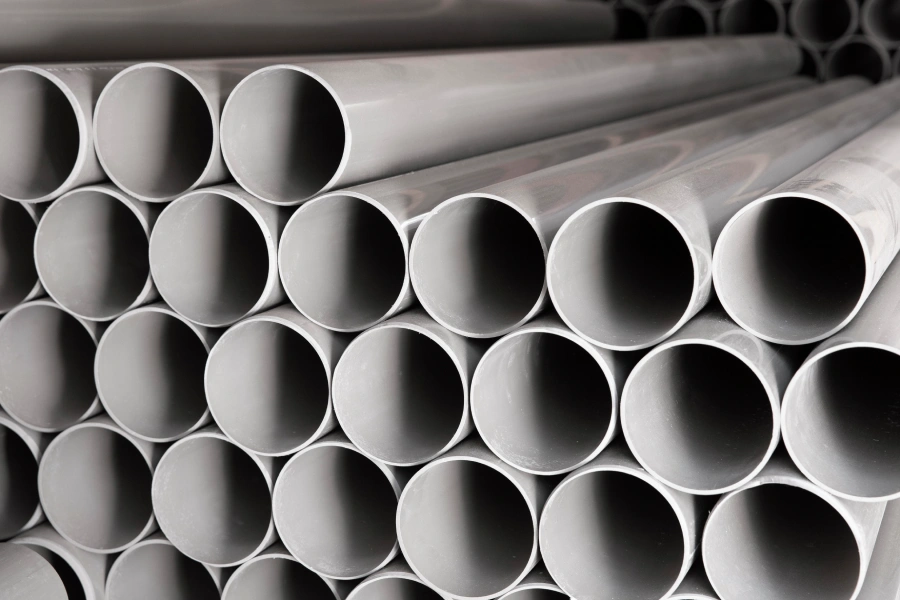
Stainless Steel Sheet, Pipe, & Tube | Know Benefits, Application, & More
In 1913, engineers and metallurgists identified stainless steel as an excellent raw material to work with. Therefore, the stainless steel sheet in Tripoli, Libya, is one of the most durable, resistant to corrosion, and aesthetically pleasing sheets in nearly every setting, regardless of the industry. However, in today’s time, metal manufacturing firms produce stainless steel plates and sheets, or design the metal into tubes, eventually selling approximately 60.6 million tons every year.
Nevertheless, in this comprehensive blog, we will explore everything every individual should know about stainless steel pipe and tube in Benghazi, Libya, including its grades, properties, technical configuration, benefits, and more.
What is a Stainless Steel Sheet?
A stainless steel sheet in Tripoli, Libya, is a flat, thin piece of stainless steel used in numerous industries, including manufacturing, electronics, residential projects, aerospace, pharmaceuticals, and more. Furthermore, it is defined by its sustainable properties & structure, high resistance to corrosion, and modern appearance. Moreover, stainless steel sheets are manufactured from an alloy that contains iron, chromium, and other components, such as molybdenum and nickel. Likewise, by definition, stainless steel includes at least 10.5% chromium, which ensures that the raw material’s hallmark corrosion-resistant properties.
Usually, a stainless steel coil in Misrata, Libya, is available in thicknesses ranging from 7 gauge ( 0.016 inches to 0.1875 inches). Additionally, thicker options (usually 0.188 inches and above) are classified as stainless steel plates.
What are the Key Benefits of Stainless Steel Sheet?
Here are some key benefits of stainless steel sheets that every individual should consider before purchasing them for their upcoming projects, regardless of the industry.
1. Corrosion Resistance
A stainless steel bollard in Sabha, Libya, offers a competitive advantage in terms of corrosion resistance, thanks to a thin, invisible chromium layer that protects the metal’s surface from oxidation. Likewise, since this passive protection layer can break down in an isolated position, a phenomenon known as pitting, manufacturers add other shielding components, such as molybdenum, nickel, and manganese, to enhance its durability.
2. Durability
Stainless steel sheets or bollards are highly resistant to wear, extreme temperatures, and impact. Moreover, while they might wear barely faster than carbon steel in some application areas, their overall robust strength and resilience make them a reliable choice.
3. Aesthetic Appeal
A SS sheet and pipe Tripoli, Libya, is one of the best examples of aesthetic products made of stainless steel sheets. However, stainless steel offers a shiny and bright finish that will never go out of trend. Similarly, since manufacturers can polish, brush, or mattify this metal, numerous treatment options are available for any architectural or decorative purpose.
4. Ease of Fabrication
In comparison with other types of metals, stainless steel sheets can be easily cut, formed, or welded into different shapes and sizes. Furthermore, they can be cut and customized in various styles with laser cutting, shearing, and waterjet cutting. Nonetheless, stainless steel can be slightly touched, which can be bent using press brakes.
5. Hygienic Properties
A stainless steel sheet in Tripoli, Libya, features a non-porous surface, making it easy to clean and an ideal choice for food service and medical environments.
Technical Configuration of Stainless Sheets, Pipes, & Bollards
1. Stainless Sheets
| Parameter | Specification / Description | Remarks / Example Values |
|---|---|---|
| Material Grade | ASTM / AISI Grade | 304, 304L, 316, 316L, 310S, 409, 430 |
| Standard | ASTM, JIS, EN, DIN, IS | ASTM A240 / A480, JIS G4304, EN 10088, etc. |
| Thickness (mm) | 0.3 – 100 mm | Common range: 0.5 – 6 mm for sheet form |
| Width (mm) | 1000 / 1219 / 1250 / 1500 / 2000 | Custom widths available on request |
| Length (mm) | 2000 / 2438 / 3000 / 6000 | Can be cut to size |
| Surface Finish | 2B, BA, No.1, No.4, HL, Mirror (No.8) | Depends on application (decorative, industrial, etc.) |
| Edge Condition | Mill Edge, Slit Edge | Slit edge for precise width |
| Tensile Strength | 500 – 750 MPa (typical for 304) | Varies by grade |
| Yield Strength (0.2% Proof) | 200 – 350 MPa | Varies by grade |
| Elongation (%) | ≥ 40% | For standard annealed sheet |
| Density | ~7.93 g/cm³ | Slightly varies with composition |
| Hardness (HRB) | ≤ 90 (annealed 304) | Depends on temper and grade |
| Corrosion Resistance | Excellent (especially 316/316L) | Depends on environment (marine, chemical, etc.) |
| Temperature Range | Up to 870°C (304), 925°C (316) | Continuous service temperatures |
| Formability | Good to Excellent | Suitable for bending and fabrication |
| Weldability | Excellent | TIG, MIG, and spot welding are suitable |
| Magnetism | Non-magnetic (austenitic grades) | Ferritic grades are magnetic |
| Applications | Construction, kitchenware, chemical equipment, automotive, etc. | Grade-specific usage |
2. Stainless Steel Pipes & Tubes
| Parameter | Description / Specification | Remarks |
|---|---|---|
| Material Grade | AISI 304 / 304L / 316 / 316L / 310 / 321 / 347 / 904L | As per ASTM A312 / A213 / A249 / A269 standards |
| Standards / Specifications | ASTM A312 (Seamless & Welded Pipes) / ASTM A213 (Boiler & Heat Exchanger Tubes) / ASTM A249 (Welded Tubes) / ASTM A269 (Instrumentation Tubes) | Defines mechanical & chemical requirements |
| Type | Seamless / Welded / ERW / EFW | Based on the manufacturing process |
| Outer Diameter (OD) | 6 mm – 914 mm ($1/4″ – 36″) | Custom sizes available |
| Wall Thickness (WT) | 0.5 mm – 50 mm (Sch 5S to Sch XXS) | Depends on pressure rating |
| Length | 6 m / 12 m / Cut length / Random length | As per the order requirement |
| End Finish | Plain End (PE), Beveled End (BE), Threaded End (TE) | Based on the connection type |
| Surface Finish | Mill Finish / Pickled & Passivated / Polished (180, 240, 320, 400 Grit) / Mirror Finish | Tubes are often polished for decorative use |
| Tolerance | As per ASTM / ASME standards | OD, WT, and length tolerances maintained |
| Manufacturing Process | Hot Finished / Cold Drawn / Cold Rolled | Affects mechanical strength & finish |
| Testing | Hydrostatic Test, Eddy Current Test, Ultrasonic Test | Ensures integrity & leak-proof performance |
| Certification | EN 10204 3.1 / 3.2 Mill Test Certificate | Confirms compliance & traceability |
| Applications | Oil & Gas, Chemical, Petrochemical, Power Plant, Food, Pharma, Construction | Industry-specific usage |
| Temperature Range | -196°C to +870°C (depending on grade) | High temperature & corrosion resistance |
| Corrosion Resistance | Excellent in most environments | Enhanced in molybdenum grades (e.g., 316L) |
| Pressure Rating | As per ASME B36.19M / B36.10M | Based on schedule & grade |
| Connection Type (for tubes) | Ferrule Fittings / Flanged / Welded / Threaded | Depends on the end-user application |
3. Stainless Steel Bollards
| Parameter | Specification / Description |
|---|---|
| Material | Stainless Steel (Grade 304 / 316 for corrosion resistance) |
| Finish | Satin (brushed) / Mirror polished |
| Bollard Type | Fixed / Removable / Retractable / Automatic (hydraulic or pneumatic) |
| Diameter ($\emptyset$) | 76 mm / 89 mm / 101 mm / 114 mm / 168 mm / 219 mm (custom sizes available) |
| Height Above Ground | 600 mm / 800 mm / 900 mm / 1000 mm |
| Wall Thickness | 2 mm / 3 mm / 4 mm / 5 mm |
| Mounting Type | Surface-mounted / Below-ground embedded / Flanged baseplate |
| Base Plate Dimensions | Ø200–300 mm × 10–12 mm thick (for flanged types) |
| Foundation Depth (for embedded type) | 300–600 mm (depends on impact rating) |
| Top Design | Flat / Dome / Angled / Mitered / With reflective band |
| Reflective Band | Optional – Class 1 or 2 reflective tape, 50 mm / 100 mm width |
| Operation (for automatic type) | Hydraulic / Pneumatic / Electromechanical |
| Power Supply (automatic type) | 230V AC / 24V DC |
| Raising/Lowering Time (automatic) | 3–6 seconds (typical) |
| Impact Resistance | 30–100 kJ (depending on model) |
| Protection Level | IP67 (for retractable/automatic units) |
| Temperature Range | -20°C to +60°C (standard); extended range available |
| Optional Accessories | LED illumination, access control system, safety sensors, drainage kit |
Applications of Stainless Steel Sheets in Different Industries
Let’s explore the various industries where stainless steel sheets are frequently used for their diverse purposes.
1. Automotive
The automotive industry relies on stainless steel sheets for their robust strength, resistance to extreme temperatures, and lightweight, effective properties. Standard applications include trim components, exhaust systems, and structural elements.
2. Medical Industry
A stainless steel sheet or bollard in Benghazi, Libya, is imperative in medical circumstances due to its resistance to corrosion, sterility, and ease of cleaning. Moreover, they are used to make surgical instruments, medical implants, hospital furniture, and the hospital’s outer area fence.
3. Food Service
Stainless steel sheets ensure ease of cleaning and hygiene on everything from food processing tools to kitchen counters, making them an excellent choice for maintaining food safety standards.
4. Aerospace
A stainless steel bollard in Sabha, Libya, is utilized in the aerospace industry for its ideal strength-to-weight ratio, resistance to high temperatures, sustainability, longevity, and durability.
5. Construction
Stainless steel sheets are utilized for roofing, structural supports, and cladding. Likewise, their resistance to different circumstances or environmental conditions ensures durability and aesthetic appeal.
What is the Chemical Composition of Stainless Steel Sheets?
Stainless steel sheets derive their properties from the elements that comprise them. There are different grades of stainless steel, each with a distinct alloy, but all contain a minimum of 10.5% chromium. It is chromium that makes the steel stainless. Additionally, they all have other standard elements, including these:
- Iron: All steels begin with iron. It is the foundation of the alloy.
- Carbon: All steel contains carbon, which provides the iron with strength and hardness.
- Silicon: It is an iron stabilizer that removes oxygen from the metal to provide steel with corrosion resistance.
- Manganese: Manganese stabilizes, hardens, and strengthens the metals. Titanium. Nonetheless, this metal enhances weldability and reduces intergranular corrosion.
- Nickel: The more nickel in the alloy, the better its formability and toughness.
- Molybdenum: Molybdenum improves pitting and crevice corrosion resistance.
It’s Time to Wrap Things Up!
We hope this blog has provided you with all the precise details about stainless steel sheets. However, if you are searching for the best manufacturer of SS sheet and pipe Tripoli, Libya, look no further than Global Matco Industry. We offer a wide range of stainless steel sheets, whether you want raw materials or finished products. We understand that aesthetic appeal is one of the significant factors that makes individuals more interested in stainless steel, as it provides classy finishes for any project or industry. So, what are you waiting for? Connect with us today to purchase the top-quality stainless steel sheets or their finished products at the best competitive price.