
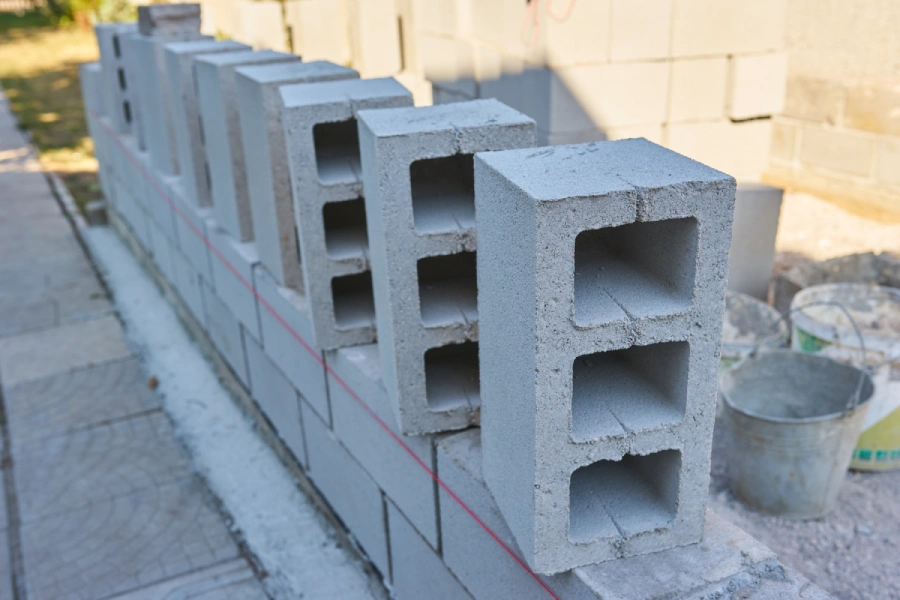
Learn About Functional Precast Concrete Blocks | Types, Applications, & More
Do you know? The use of a precast concrete block in Abuja, Nigeria, is increasing rapidly. It is due to urbanization, the demand for more efficient construction methods, and infrastructure development. Furthermore, precast concrete plays a crucial role in modern construction because of its sustainability, versatility, efficiency, and design flexibility.
Additionally, these are ready-made concrete blocks manufactured by leading precast concrete block manufacturers in Lagos, Nigeria, at a factory or controlled location. “Precast” means pre-cast. These blocks are made from cement, sand, gravel, and water, and once they have hardened, they are transported to the construction site and used. They are used to make walls, boundary walls, pavements, or parts of buildings. The most significant advantage of precast blocks is that they offer uniform quality, fast construction, and low waste. Furthermore, they simply need to be assembled on site, saving both time and labor.
Nevertheless, in this comprehensive blog post, we will discuss everything about precast concrete blocks, including their types, pros and cons, applications, and more. So, let’s start the blog.
Technical Configuration of Precast Concrete Blocks
| Parameter | Specification / Description |
|---|---|
| Material | Reinforced or plain concrete (M20–M40 grade) |
| Size (Typical) | 400 mm × 200 mm × 200 mm (standard), customizable as per design |
| Density | 2200 – 2500 kg/m³ |
| Compressive Strength | Minimum 5 – 15 MPa (depends on application) |
| Water Absorption | ≤10% by weight |
| Curing Method | Steam curing or water curing for 7–28 days |
| Reinforcement (if applicable) | Mild steel or TMT bars (Fe415/Fe500) |
| Surface Finish | Smooth or textured, ready for plaster or paint |
| Tolerance | ±3 mm on length, width, and height |
| Applications | Walls, retaining structures, boundary walls, paving, load-bearing walls |
| Standards Followed | IS 2185 (Part 1): 2005 / ASTM C90 |
What are the Significant Types of Precast Concrete Blocks?
Let’s explore the most commonly used fundamental types of precast concrete block in Kano, Nigeria, which every individual should know before using them for their construction sites.
1. Hollow Blocks
Hollow blocks are one of the vital types of concrete blocks, which are used primarily in construction and feature voids or holes running through them. Furthermore, they are lighter than solid blocks and are used in the construction of building walls, foundations, and other essential structures. Likewise, the holes in the hollow blocks can be filled with rebar for robust strength, used to operate wires or pipes, and help with sound and thermal insulation.
Key Features of Hollow Blocks
- Provide Structural Support
- Thermal and Sound Insulation
- Contain Fire Resistance Properties
- Faster Construction
- Cost-Effectiveness
Technical Configuration
| Parameter | Specification |
|---|---|
| Material | Cement, sand, gravel, water |
| Block Type | Hollow Concrete Block (HCB) |
| Standard Size | 400 mm × 200 mm × 200 mm |
| Face Thickness | 30 – 50 mm |
| Compressive Strength | 3.5 to 15 N/mm² |
| Density | 800 – 1500 kg/m³ |
| Water Absorption | ≤10% by weight |
| Void Area | 25% – 50% of total volume |
| Curing Time | Minimum 14 days |
| Applications | Walls, partitions, boundary walls |
Advantages of Hollow Blocks
Here, we have mentioned the significant advantages of hollow blocks:
- Dubrablity
- Faster Construction
- Better Insulation
- Lightweight
- Space-saving
Disadvantages of Hollow Blocks
Here are some common disadvantages of a hollow precast concrete block in Abuja, Nigeria:
- Water Seepage
- Need for Skilled Labor
- Aesthetic Limitations
- Less Eco-Friendly than Some Alternatives
- Higher Start-Up Cost
2. Solid Blocks
Solid blocks are heavy, dense concrete units with no gaps, primarily used on construction sites for their load-bearing properties and high strength. Moreover, precast concrete block manufacturers in Lagos, Nigeria, ensure they are an exceptional choice for constructing strong foundations, retaining walls, and supporting heavy walls where structural integrity is imperative. Moreover, with durability and good soundproofing properties, their heavy weight makes them more complicated and expensive to transport and install than hollow blocks.
Key Features of Solid Blocks
- High Strength and Durability
- Sound Insulation
- Environmental Friendliness
- Weight and Thermal Properties
- Moisture Retention
Technical Configuration
| Parameter | Specification |
|---|---|
| Size (Standard) | 400 × 200 × 200 mm |
| Type | Solid Concrete Block |
| Density | 1800 – 2300 kg/m³ |
| Compressive Strength | 4 – 5 N/mm² |
| Water Absorption | ≤ 10 % (by weight) |
| Cement Content | 7 – 10 % |
| Curing Period | Minimum 14 Days |
| Drying Shrinkage | ≤ 0.1 % |
| Thermal Conductivity | 0.7 – 1.3 W/m·K |
| Sound Insulation | 45 – 50 dB |
| Weight (Approx.) | 16 – 20 kg per block |
Advantages of Solid Blocks
Check out the list of vital advantages of Solid Blocks manufactured by precast concrete block manufacturers in Port Harcourt, Nigeria, that are mentioned below:
- Fire Resistance
- Versatility
- Pest Resistance
- Energy Efficiency
- Environmental Benefits
Disadvantages of Solid Blocks
Check out the list of imperative disadvantages of Solid Blocks that are listed below:
- High Weight and Cost
- Poor Insulation
- Labor-Intensive and Costly
- Water Seepage
- Limited Flexibility
3. Aerated Autoclaved Concrete (AAC) Blocks
AAC (Aerated Autoclaved Concrete) Blocks are precast, lightweight, cellular concrete building blocks made from cement, lime, sand, a small amount of aluminium powder, and gypsum. Furthermore, the aliminium powder makes a cellular layout by causing the blend to rise and expand, and the blocks are then fixed under massive pressure and hot steam in an autoclave to give them their final structure and strength. Nevertheless, this procedure yields fire-resistant, highly thermal, durable, and acoustically insulating raw materials for roofs, walls, and floors.
Key Features of Aerated Autoclaved Concrete (AAC) Blocks
- Reduced Structural Load
- Thermal Insulation
- High Fire Rating
- Quieter Interiors
- Pest Resistant
Technical Configuration
| Property | Typical Value / Range |
|---|---|
| Density (Dry) | 550 – 650 kg/m³ |
| Compressive Strength | 3 – 4 N/mm² (MPa) |
| Thermal Conductivity | 0.16 – 0.24 W/m·K |
| Sound Insulation | 40 – 45 dB |
| Fire Resistance | 2 – 6 Hours |
| Water Absorption | ≤ 10 % by weight |
| Modulus of Elasticity | 1,500 – 2,000 N/mm² |
| Drying Shrinkage | 0.2 – 0.3 mm/m |
| Block Size (Typical) | 600 × 200 × (75–300) mm |
| Weight per Block | 8 – 15 kg |
| Workability | Excellent |
Advantages of Aerated Autoclaved Concrete (AAC) Blocks
Here, we have mentioned some imperative advantages of AAC precast concrete block in Kano, Nigeria, that every individual must know:
- Easy to Handle
- Durable and Long-Lasting
- Versatile
- Eco-Friendly
- Provides Superior Thermal and Acoustic Insulation
Disadvantages of Aerated Autoclaved Concrete (AAC) Blocks
Here, we have listed some crucial disadvantages that you must not ignore when planning to opt for AAC blocks:
- High Initial Cost
- Brittle And Prone to Cracking
- Water Absorption
- Requires Specialized Labor
- Adhesion Issues
What are the Vital Materials Used in Precast Concrete Blocks?
The raw materials used in the precast production process are also preferred for concrete block production. Nonetheless, some raw materials may differ here, as precast concrete block in Abuja, Nigeria, are produced in multiple shapes and sizes for various purposes.
For instance, these precast concrete block-making procedures can be used in foundation feet, sills, and cornices. Moreover, the raw materials and sizes might vary. Usually, the raw materials are used in the manufacturing process by the leading precast concrete block manufacturers in Port Harcourt, Nigeria, which are:
- Concrete
- Water
- Gravel Stones
- Sand
- Powdered Cement
A significant proportion of these raw materials is the real game changer, determining the overall strength of the block material. Therefore, these products have a dense structure due to their high sand ratio and low water content. Additionally, slag and granular coal are highly preferred for the addition of gravel stones and sand in construction. Likewise, it is also known as slag blocks.
Applications of Precast Concrete Blocks in Different Industries
As we all know, precast concrete blocks are widely used in multiple industries. Thus, we have mentioned some imperative applications of precast concrete block in Kano, Nigeria, in different sectors:
1. Commercial and Industrial Retaining Walls
Precast concrete retaining walls are imperative for commercial and industrial applications. It reinforces slopes, prevents soil erosion, and makes level surfaces to function smoothly. Whether it’s a warehouse, storehouse facility, or distribution centre, walls provide the framework stability required for grave-duty projects.
2. Infrastructure and Roads Development
When it comes to roads and infrastructure development, precast concrete plays an essential role. Likewise, it offers durable, high-strength solutions that stand up to heavy traffic and severe weather situations. From culverts and barriers to bridge elements and tunnels, a precast concrete block in Abuja, Nigeria, enhances reliability, cost-effectiveness, and safety.
3. Agriculture Storage and Retaining Walls
Agricultural and farm facilities need robust, secure storage solutions to handle bulk materials, grain, and silage effectively. Moreover, precast concrete retaining walls provide the ideal infrastructure for preserving organized storage areas while ensuring structural integrity, versatility, and durability.
It’s Time to Wrap Things Up!
Precast concrete is the foundation of all materials, regardless of the industry. Furthermore, we hope this blog has provided you with all the precise details of precast concrete. If you are looking for the best precast concrete block manufacturers in Lagos, Nigeria, look no further than Global Matco Industry. Whether you need concrete blocks for agricultural, industrial, or commercial use, we deliver on time. So, do not wait any longer. Connect with us today!